How Much Money Do You Spend Buying Scratch Cards?

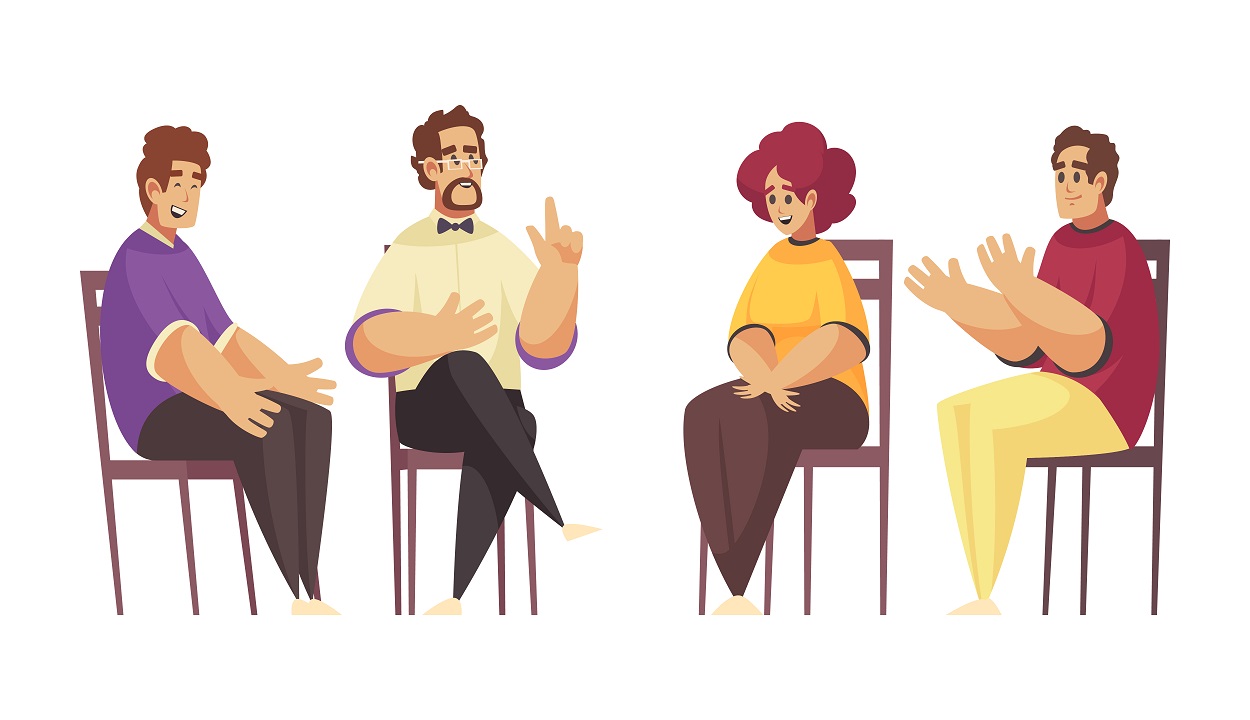
Image by macrovector on Freepik 

Have to ever been standing next in line at the super market when some old bloke pulls out a wad of lottery tickets, a few winning scratch cards and, after all that has been tallied up, buys another £50 worth of hopes and dream?

Don’t forget: ‘It could be you!’

Not only have a couple of minutes of your life passed away in the process (I really need to buy one of those dream catchers) but you begin to question what is going on before you.

What I am looking at here?

Unless that person starts jumping up and down, screaming, shouting, crying in disbelief, that they have won a life-changing amount of money [whatever that is in these times of high inflation] they disappear from the shop, still hopeful, that one of those scratch cards or lottery tickets is the ‘one’.

Big money.’

Not small money.

Big money.’

Inspired by a John Cristani YouTube video. Affiliate marketer.

You see most punters scratching away as they stand outside the shop. I guess it’s less walking if you have a bit of joy and have to come back. It’s like exercise is the middleman. I guess if you are overweight, a heavy smoker, like a few pints each night, all these things need to be considered. I obviously say that as some kind of stereotype of a gambler. However, they often hold a grain of truth.

You get all kinds of people buying let’s say a scratch card. Although a large number look as though they spend more money each week on fuelling their scratch card and lottery hopes than they do buying a decent pair of shoes, a new shirt, pair of trousers or even having a hair cut, shave or look in the mirror. A few of those things don’t really cost any money.

It’s a worry.

Most people, and realistically me included, don’t give a toss. My initial concern being held up by a scruffy bloke, who looks potless but splashing the cash, motivated by money. Which comes, for him, in the shape of a small piece of paper which glows with hope until that neon sign blinks a couple of times and goes out with the realisation of holding another loser.

Cast aside. Worthless.

I think the truth of fixed odds betting would come to the realisation of the individual if they saved up a life time of gambling money and had one big gamble. They purchased £50,000 of lottery tickets. I don’t know what the average return would be on that kind of money. But I will tell you this much. Unless you got very lucky (I should have said very about a million times) you would look at the return from 50K and be horrified.

I doubt you would even win a grand.

It would be such a shocking moment that you would never bet again.

This is the truth of fixed odds gambling. The more you bet, the more you lose. Yes, one person in however million wins a fortune but the odds state that for you to win a million you would have to bet more.

A sobering thought.

But not for the scratch card fan, hobbyist or addict.

I would so love to ask the bloke 20 questions about his gambling.

1) Why do yo bet?

2) How much do you gamble on a day, week, month, year?

3) What’s the most money you have ever won?

4) What motivates you in life?

5) What would you do if you won a million pounds?

6) Are you concerned about your gambling?

7) Why do you look like a tramp, stink of body odour, struggle with life, and base all your hopes and dreams on something which, sadly, is never likely to happen…

You can imagine any question you like. They can be yours. You don’t have to have a question. Who cares? People do as they do! It’s their problem.

True.

A blatant mix of hope against adversity there in a ticket.

This brings back fond memories of Charlie and the Chocolate Factory.

I think people see what they want to see. They behave how they behave. In that I mean, it is very unlikely anything I could say will change their thought process, opinion, motivation, willpower, hopes or dreams. My list of words could go on and on until they got bored and tell me to: ‘Fu** Off!’

I’d be accused of wasting valuable scratch time, jinxing them, scared to be out after 12pm in case they turned into a pumpkin.

I wonder if Cinderella read Charlie and the Chocolate Factory or the wicked step sisters bought scratch cards.

It’s just a little bit of fun.

You’ve got to be in it to win it!’

That’s how it works.

But that first scratch card leads to another, to even more, until every time you go to the shop you find yourself walking outside with a wad of scratch cards, lottery ticks but you still have your hopes and dreams.

Until they flicker like that aging neon sign.

That buzz continues but the light in the eyes has faded away.

Question your gambling.

Fixed odds compared to skill bets are bad news.

Take a look in the mirror and see the truth.

When Reader Marks Your Casino Post As Spam

Image by Freepik

You never know who is reading your post.

In an ideal world you want someone to enjoy your carefully crafted article. The more traffic the merrier. But you may get that corrosive person who is anti gambling. Who feels you are there to take advantage of everyone who may be naive to the consequences of a flutter. They’ll be sucked in one end of the line and thrown out the other penniless and brainwashed.

Addicted.

I guess in theory this could happen.

I find it irritating that someone could just turn up and read a post and then say they will contact Google defining it as spam. I can understand such a mindset if it turns up in your email and unsolicited. I’ve done it myself when I’ve been added to a list I didn’t subscribe. But to see an article on a website and view it as spam just seems to me like the action of someone with too much time on their hands. Someone who is as corrosive as they may be well meaning.

Who knows?

It disappoints me how gambling is viewed. When compared to drinking alcohol which seems to be normalised as though its a laugh. You buy a birthday card and it has someone on the front with a giant pint of beer. It reminds you of your cousin so you buy it and it’s one big laugh. You have only to see all the isles in supermarkets to realise why no one wants to make too much of a fuss about drinking. There’s so much money to be made from alcohol that any number of wasted lives or lives lost is fair game. What percentage of people in A & E every weekend are related to alcohol?  It’s only when you want to bet on who is going to succumb to drink first that it leaves a nasty taste in the mouth of the drinker, seller or public.

I believe in freedom of speech and responsibility.

If people fall victim to gambling or drink or drugs then the major part of the harm and responsibility is themselves. I’m sure a lot of readers will see this as wrong, harsh or untrue. But where do you place the blame on anything if it is there to be considered? I just couldn’t help myself. I’m addicted to robbing banks. Poor soul. He wasn’t himself when he walked into the bank with a sawed off shotgun. He was compelled to do it. It’s beyond his control. I can imagine the judge would listen to those words and lock the person up for even longer.

If someone has a problem then they need to find the strength to get help because if they can’t then who is to blame? You can only do so much. All these self help books. I just can’t stop buying them. I feel compelled to buy them. I just don’t think they should be sold any more to anyone as they are akin to getting people hooked on crack cocaine.

There’s a good reason I don’t take meths. I decided I didn’t want to get involved in drugs. The same reason I don’t drink too much or bet what I can’t afford to lose.

Sure some people kind of find themselves in a position. We all need help at times.

I don’t know who marked the post as spam.

They clearly have a reason for doing it. Perhaps they had a gambling problem and just see the danger involved.

I would feel slightly strange marking a post on a website as spam.

If it is not your thing then keep away from casino articles or gambling websites.

There are millions of things on the internet we could take offence to clearly those things which are illegal should be marked or detailed to the authorities.

But doing so to an article about gambling shouldn’t happen.

Cheers.

Do Animals Gamble?

Image by macrovector on Freepik

Are we so different?

I’m talking about gambling. Who doesn’t like a little flutter? Perhaps pigeons like a flutter. That’s a little gamble and not just a flight from the loft heading south and back home. I’m sure our feathered friends would be betting on themselves if they fancied their chance of winning.

Ten scoops of corn to one.

Do animals gamble?

I can’t say I have ever thought about it much but are we really so different as a species? I think we limit all creatures great and small. There has been little research of let’s say the gambling pursuits of snails. I doubt you will see the study sponsored by Ladbrokes. But that doesn’t mean to say the humble snail doesn’t know a thing or too.

Clearly, animals gamble and I will prove the point.

For starters, many of you may ask if homo sapien has a gambling gene. It seems that a small percentage of babies are born with such biology whereas all apes are born with the gambling gene. In fact, there is a famous chimpanzee called Mickey The Chimp who is quite an accomplished poker player. A professional gambler played him and said he is better behaved than most players.

But apes aren’t he only ones who like to gamble.

Psychologists have researched pigeons with regard to memory, learning and all aspects of cognition.

They’ve proven they like to gamble.

But which animals have been proven to enjoy a gamble?

It seems that pigeons do indeed like to gamble. In fact, the pigeon had the chance to peck and get a regular amount of corn but when a jackpot signal was seen they would take a chance on a gamble even though long term it would guarantee a lesser return. Those pigeons didn’t have any more luck than homo sapien. You’ve got to feel for our feathered friends. As Zentall said: ‘There’s something at a fundamental level for the attraction to gambling.’

Scientists in Canada built a ‘rat casino’ and found that flashing lights and sounds made rats more prone to taking risks when gambling. Instead of money, rats could win sugary treats. Under normal conditions, the rats worked out the most reliable payout and stuck with it. However, the addition of lights and sounds changed the rats behaviour. Large wins produced more lights and music than modest wins. Rats started to take greater risks to get those more exciting wins. Sadly, rats like many people displayed the signs of problem gamblers.

It’s interesting to consider that dopamine is the crucial neurotransmitter in that pleasure found in gamblers.

In time, scientific research will help understand the reasons why a percentage of gamblers are liable to succumb to addiction.

It is worth considering both vertebrates and non vertebrates have dopamine within their nervous system so you have to consider whether a snail may be prone to gamble in life. If you ever see a slug crawling up the handle of a one-armed bandit it may be a sign that it fancies its chance of hitting the jackpot.

Good luck to all.

Are You A Problem Gambler Without Realising?

Image by macrovector on Freepik 

I’m fully Cosmos Mentis.

Sound mind, memory and understanding. True, I like a gamble. But I’m not a problem gambler and not addicted.

However, it is known that many problem gamblers actually believe they are social or professional gamblers.

Could this be you?

It is often considered that problems gamblers have mental health issues such as substance misuse, personality disorders, depression and anxiety.

Other risk factors include sex, age, family or friend influence and medication.

From a race point of view there is research to indicate that black people represent some of the most significant rates of gambling disorders. In fact, black people have over twice the rate of gambling addiction compared to white people.

It’s something to think about.

The definition of a professional gambler: is someone who makes a living off their gambling winnings.

The definition of a social gambler: is someone who bets for fun.

It’s interesting to consider the possibility that social and professional gamblers may be deluding themselves that they are not problems gamblers in the sense of compulsivity or addiction.

It made me stop for a moment to consider my character, motivation and mental health. Could it be possible I am a problem gambler without realising? For those who gamble on a continuous basis it could be something to assess. How would you feel if you had to stop gambling for a day, week, month or year? What if you had to stop gambling for the rest of your life.

Would it be a problem?

I guess the only way we can assess the implications of such abstinence is if we take part in such an experiment.

Could you stop gambling for a month?

I have dedicated much of my life to gambling. My niche is two-year-old horse racing which I consider myself to be a professional. These skills and knowledge have taken decades to learn.

Have I been motivated by an addiction I don’t realise I have?

If someone said I was a gambling addict, I would be quite abrasive about it. I’d take it personal.

What a ridiculous thought.’

I’m not an addict!’

But am I even qualified to have an opinion. Should I book an appointment to see a psychiatrist?

Perhaps we all need a little bit of ‘help’ or ‘assessment’ or ‘something’.

Personally, I don’t think I have a problem. I don’t feel that I need to gamble. However, there in lies the problem. I have to work within the gambling world because that’s what I do. How do I analyse my motivation to gamble? Is it something I do without addiction or is it part or wholly the reason why I bet?

I view my gambling as work. How would you assess your job? You work 36-hours a week and it’s your job. Are you addicted to your job? I guess not, hey. Because that’s what you do to make a living.

It kind of indicates that if you make a living from being a gambler that you aren’t an addict. But that doesn’t mean you’re not. To some extent I would suggest that being addicted to your profession isn’t all bad, because it keeps you dedicated and working hard.

Could I stop gambling for a month?

I have and do most years. Perhaps this details I’m not a gambling addict or a problem gambler.

Assessing how we gamble and the motivations behind this are worthy of thought because I’m sure there are many social and professional gamblers who really cannot stop gambling. I guess if it doesn’t impact negatively on your life that isn’t a problem. But by the very nature of addiction it is a problem. If you find your gambling is creating chaos in your life then you may have a big problem.

Abstain from gambling for a month and see if you can do it or not.

It may be an indicator for further self reflection.

Is It A Good Idea To Gamble?


Image by vectorpouch on Freepik

The short answer is probably no.

However, like most things, there isn’t a simple answer to why we should gamble or not. Obviously we live in a world where our very existence, opportunities, hopes and dreams are in the balance.

A gamble.

Something we can, with wisdom or blind faith, manipulate for our ends.

We can alter the recipe of serendipity to benefit our very chance of success.

A gamble can be calculated, built on a strong foundation of knowledge.

However, there is a world of difference between a stupid gamble and one which we can have earnest beliefs will prove positive.

Most people consider a gamble as a sports wager as if it is devoid of the larger life at hand. Betting for fun or having a fun bet is a concern for me. For most people who do gamble this is exactly how they bet. It starts with ‘fun’ and may progress to a higher level of understanding to a point of someone achieving the status of a professional gambler. The likelihood of this happening is minimal.

There is a concern and almost inevitability that any new gambler is naive to the potential problems. What is the percentage of punters who fall victim to addiction? I have no idea, but surely one is too many. This is why individuals need to assess the implications of gambling as if you would smoking that first cigarette or taking drugs. It sounds extreme but I feel gambling shouldn’t be viewed as fun.

My personal story about gambling is like any other, starting with exceptional naivety. I have never been a reckless person or bet in a reckless fashion. That is a Godsend. I’ve followed the trusted maxim: ‘Bet what you can afford to lose’. That was the starting point of a life which has seen me bet a couple of grand on an individual horse. From those initial thoughts of interest about horse racing I have worked tirelessly to develop my skills, understanding and knowledge. It’s been a long winding road, and I’m still on that dusty path, heading towards the end of the rainbow. I say that tongue in cheek but it is an ambition to make a lot of money from gambling. I’ve made a substantial amount of money but those skills to build an ultimate knowledge are  progressive and eternal.

Gambling akin to investing shouldn’t be taken lightly. In truth, your success or failure isn’t anything to do with money. It is based on skill. If you cannot appreciate and reason why you have an edge over the layer then you shouldn’t bet. In the short term you can win some and lose some. But long term you need to have the skills which detail you are very likely to be in profit. That knowledge can take decades to learn. You need a real passion to fuel your motivation to learn everything you need to be a successful gambler. If you are simply interested because you feel it is a get rich quick scheme you are sadly mistaken. It is much more interesting to learn the skills to a subject than bet for fun. It isn’t something you should take lightly because it can be detrimental to your life and your family.

Good luck.